
Roof Repair or Replacement in Maryland: How to Decide
Maryland roofs face freeze-thaw, nor'easter wind, summer heat and Chesapeake humidity, so the repair-versus-replacement question is rarely about one shingle. The right answer depends on the roof's age, the pattern of damage, its leak history, the condition of the decking underneath, and whether ventilation and flashing details are sound. This guide walks through each factor, so you can judge an inspection report with confidence.
Repair makes sense when damage is local
A repair makes sense when the roof is young to mid-life, damage is isolated to one slope, one flashing detail or a few shingles, and the first leak has a clear, identifiable cause. Decking underneath should be dry and solid, and the surrounding field should still have service life. In that case, a targeted repair that matches colour, profile and course alignment, and that fixes the flashing or ventilation detail that caused the problem, is usually the right step.
Replacement should be discussed when damage is widespread
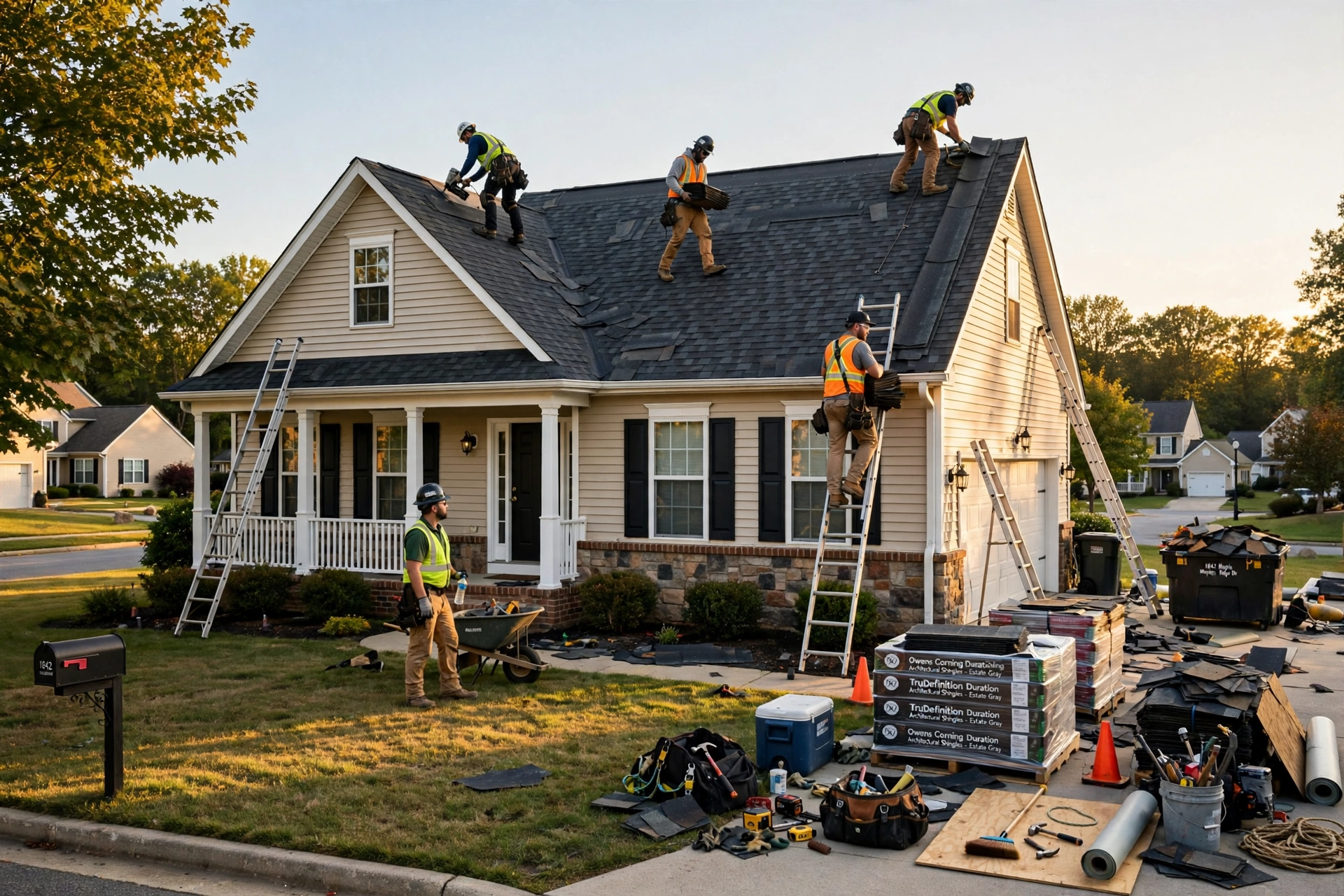
Replacement should be discussed when wear or damage shows up across multiple slopes and components, when leaks repeat in different spots, or when curling, cracking and granule loss are widespread. Soft spots, sagging, or widespread moisture in the deck are stronger signals than age alone, because a roof with a weak deck will not hold a patch. If accumulated repairs are approaching a meaningful share of a new roof, and you plan to stay long-term, a replacement that rebuilds the system, not just the surface, may be more reliable.
The details that decide a replacement
A replacement is a system, not a surface. Underlayment, ice and water shield at eaves and valleys, flashing at chimneys, walls and valleys, drip edge at eaves and rakes, and kick-out flashing where a roof meets a wall all work together. Balanced ventilation matters too: soffit intake and ridge exhaust should work together, and a common rule is one square foot of vent for every 150 square feet of attic space. Poor ventilation bakes shingles from underneath in summer, feeds condensation and mould in winter, and contributes to ice dams at the eaves. In Maryland, ice and water shield is required at eaves and valleys, typically at least 24 inches past the interior wall line, and permits are required for replacements, with a maximum of two layers of shingles in many jurisdictions. Licensing and insurance details are available on request when you call.
Ice dams, ventilation and the Maryland winter
Ice dams form when heat escapes through the roof deck, melts snow at the ridge, and that water refreezes at the cold eaves, backing up under shingles and forcing water into the home. The fix is rarely just a shingle repair: air sealing, insulation, ventilation and waterproofing at edges all matter, and a replacement that rebuilds edge details, upgrades insulation and corrects ventilation can stop ice dams for good. If you see repeated ice dams, that is a signal to discuss ventilation and insulation, not just to patch the last leak.
How to use an inspection report
- Ask which slopes and details were checked, not just whether the roof is old
- Ask whether decking, flashing, ventilation and gutters were judged together
- Ask whether the proposed work fixes the cause, or only the symptom
- Ask about matching, colour and profile, before work is authorised
- Call 410-755-8629 to discuss the report for your home, and to confirm coverage for your address
Related services
Frequently asked questions about Roof Repair or Replacement in Maryland: How to Decide
Does a roof need replacement at a certain age?
No single age decides it. Architectural shingles typically last 20 to 25 years in Maryland, and three-tab shingles 15 to 20 years, but condition, ventilation and storm history matter more than the calendar. A well-ventilated roof with local damage can be repaired, while a younger roof with widespread decking problems may need a larger scope.
What is the difference between a repair and a replacement scope?
A repair targets a specific detail, a flashing joint, a pipe boot, a few shingles, or a valley section, while a replacement rebuilds the system from the deck up, including underlayment, ice and water shield, flashing, ventilation and drip edge. The scope should be reviewed before work is authorised, so you know which one you are agreeing to.
Should I worry about permits and licensing?
Yes, in the sense that replacements in Maryland typically require permits and local code compliance, and home improvement contractors in Maryland are licensed through the Maryland Home Improvement Commission. Licensing and insurance details are available on request when you call, and the scope, materials and steps should be reviewed in writing before work starts.
How does Maryland weather affect a roof replacement timeline?
Freeze-thaw, nor'easter wind and summer heat all affect scheduling, because a roof should not be opened in a storm, and new shingles need to seal in suitable weather. A replacement scope should include a plan for weather delays and for protecting an open roof if weather changes mid-project.
What should I compare when I look at two replacement scopes?
Compare what each scope includes, not just the total: tear-off and disposal, decking, underlayment, ice and water shield, flashing, drip edge, ventilation, cleanup and nail sweep, and how decking damage found during tear-off is handled. Two scopes with the same total can cover very different work.
Talk to Roof Fixo
Call to discuss whether repair or replacement fits your roof, and to verify service availability.