
Gutter Size Guide for Maryland Homes: 5-Inch vs 6-Inch, K-Style vs Half-Round
Most Maryland homeowners only think about gutters when they overflow, sag or leak at a joint. In a Mid-Atlantic downpour, though, size matters as much as cleaning: a gutter that is too small for the roof area above it, or that has too few downspouts, will overflow no matter how clean it is. This guide explains the standard sizes, profiles and downspout choices, so you can discuss a gutter system by its sizing, not just by its colour.
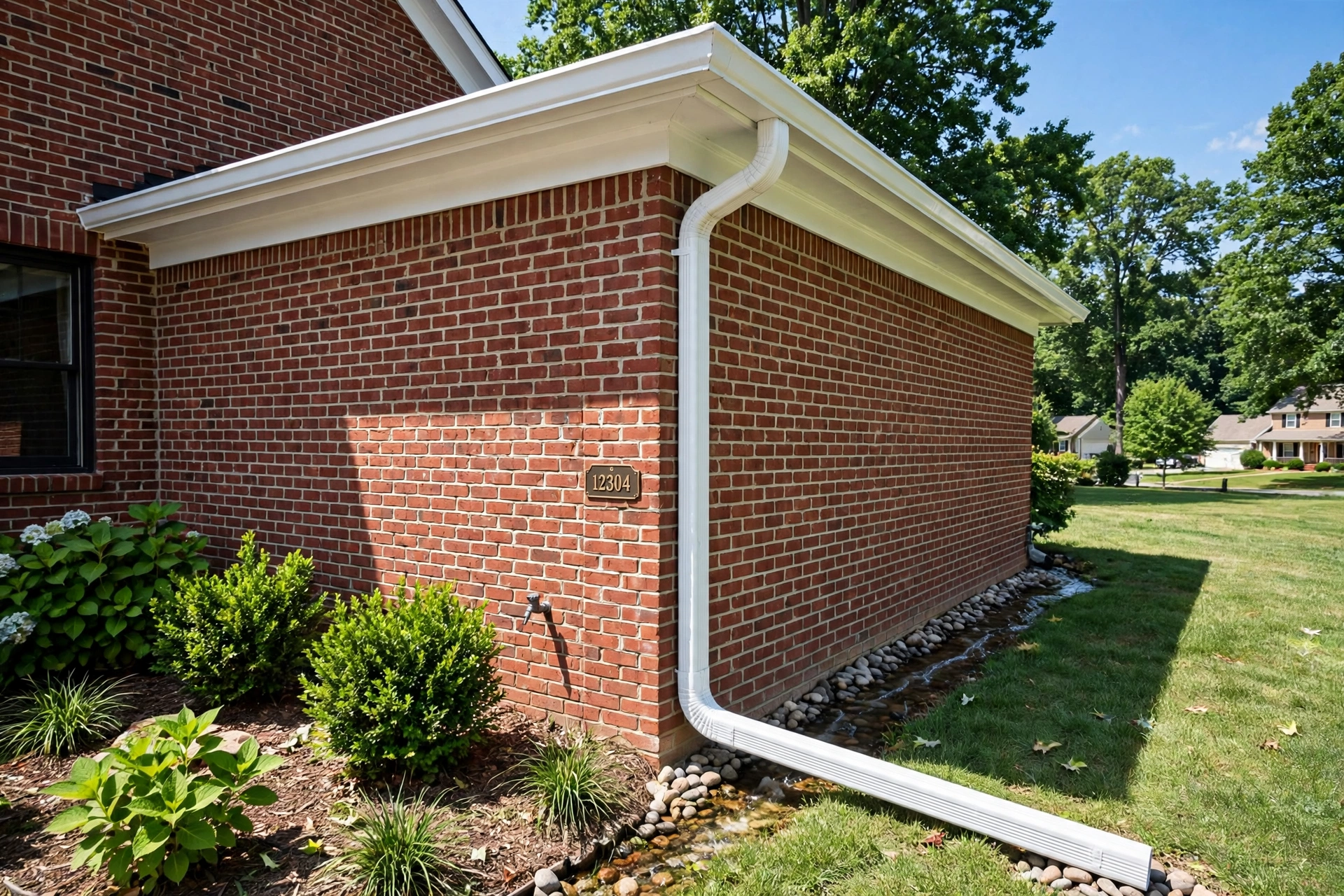
Standard sizes, and what they handle
Five-inch K-style gutters are the standard for most residential homes, typically handling roof areas up to about 5,500 square feet, while six-inch K-style gutters handle up to about 7,960 square feet, and are the better choice for larger homes or steep roofs. Five-inch gutters hold about 1.2 gallons of water per linear foot, while six-inch gutters hold about 2.0 gallons per foot, nearly 50 percent more capacity. Half-round gutters are a different profile: five-inch half-round typically handles up to 2,500 square feet, and six-inch half-round up to 3,840 square feet, so a half-round system needs careful sizing, especially on a large or steep roof.
K-style, half-round, and material
K-style gutters, with their decorative ogee face, carry more water and pair well with most modern fascia lines, which is why they are the most common choice. Half-round gutters suit older and architecturally traditional homes, shed debris more readily, and give a traditional look that suits historic properties. Most seamless gutters use aluminium, which resists rust, accepts baked-on colour and suits the vast majority of homes, with .032-gauge aluminium as the practical default. Steel offers higher impact strength for heavy ice loads, and copper provides a premium, long-lasting finish for historic and high-end homes, weathering into a patina over time.
Seamless, pitch and downspouts
A seamless gutter is one continuous piece, formed on site to the length of each run, so in most cases the only seams are at corners. That reduces the joints where sectional gutters commonly leak, and gives a cleaner finished appearance. Pitch matters as much as size: gutters should slope about a quarter inch per 10 feet toward downspouts, so water moves, rather than pooling. Downspouts should be matched to the gutter: 2 by 3 inch downspouts typically serve about 600 square feet of roof area, 3 by 4 inch downspouts about 1,200 square feet, and a downspout roughly every 40 feet of gutter is a common rule, with discharge at least four to five feet from the foundation. Hidden screw hangers, rather than spikes that come loose over time, help a system stay pitched and attached.
Signs your gutters are undersized or failing
- Water spilling over the front edge during rain, even when gutters look clean
- Sagging sections pulling away from fascia
- Peeling paint or rust streaks down the gutter face
- Pooling or eroded soil at the foundation, or a damp basement
- Rotting fascia and soffit, or cracked foundation corners
- Recurring ice dams and large icicles in winter, which signal drainage and pitch problems
What to discuss before installation
Discuss roof area and pitch, valley layout, surrounding trees, and downspout placement, because those decide size and profile, not a one-size-fits-all product. Discuss gutter guards and leaf protection if you have heavy tree cover, and discuss fascia condition, because a new gutter hung on rotting fascia will fail again. Call 410-755-8629 to discuss gutter sizing for your home, and to confirm coverage for your address.
Related services
Frequently asked questions about Gutter Size Guide for Maryland Homes: 5-Inch vs 6-Inch, K-Style vs Half-Round
Is a 6-inch gutter always better than a 5-inch gutter?
Not always. Six-inch gutters handle more water, so they suit large or steep roofs, long runs and heavy Mid-Atlantic rainfall, but on a small, low-pitch roof, a well-pitched 5-inch system with enough downspouts can work well. Sizing should follow roof area, pitch and rainfall, not a rule that bigger is always better.
Do gutter guards remove the need for checks?
No, guards reduce debris, but they do not remove the need for pitch, hanger, fascia and downspout checks, especially after major storms and after leaf fall. A guard that is clogged, or a gutter that has lost pitch, will still overflow.
Why does discharge distance matter?
Because water that discharges at the foundation will erode soil, enter a basement and keep fascia damp, even if the gutter itself is sound. Discharge at least four to five feet from the foundation, with a clear drainage path, is part of a complete gutter system, not an extra.
How do I know if my downspouts are too small?
Downspouts that overflow at the top, or gutters that spill over the front edge in a downpour even when clean, often point to downspouts that are too small for the roof area above them. A 2 by 3 inch downspout typically serves about 600 square feet, while a 3 by 4 inch downspout serves about 1,200 square feet, so the roof area above each run matters.
Should gutters be replaced at the same time as a roof?
Not always, but it is worth discussing together, because a new roof changes flashing, drip edge and fascia details, and a gutter hung on rotting fascia will fail again. If gutters are sagging, leaking at joints or undersized, replacing them with the roof can save a second round of work on the same edges.
Talk to Roof Fixo
Call to discuss gutter sizing for your roof area and pitch, and to verify service availability.