
After a Storm in Anne Arundel County: What to Check, Photograph, and Do Next
After wind, hail or a nor'easter in Anne Arundel County, the most common mistake is to look only at the wet spot indoors, or to climb on a wet roof to check it. Wind damage is often easiest to miss, because lifted tabs may look sound from below, and hail bruising may not be visible from the ground. This guide shows what to check from the ground, how to document damage, and what to do next, safely.
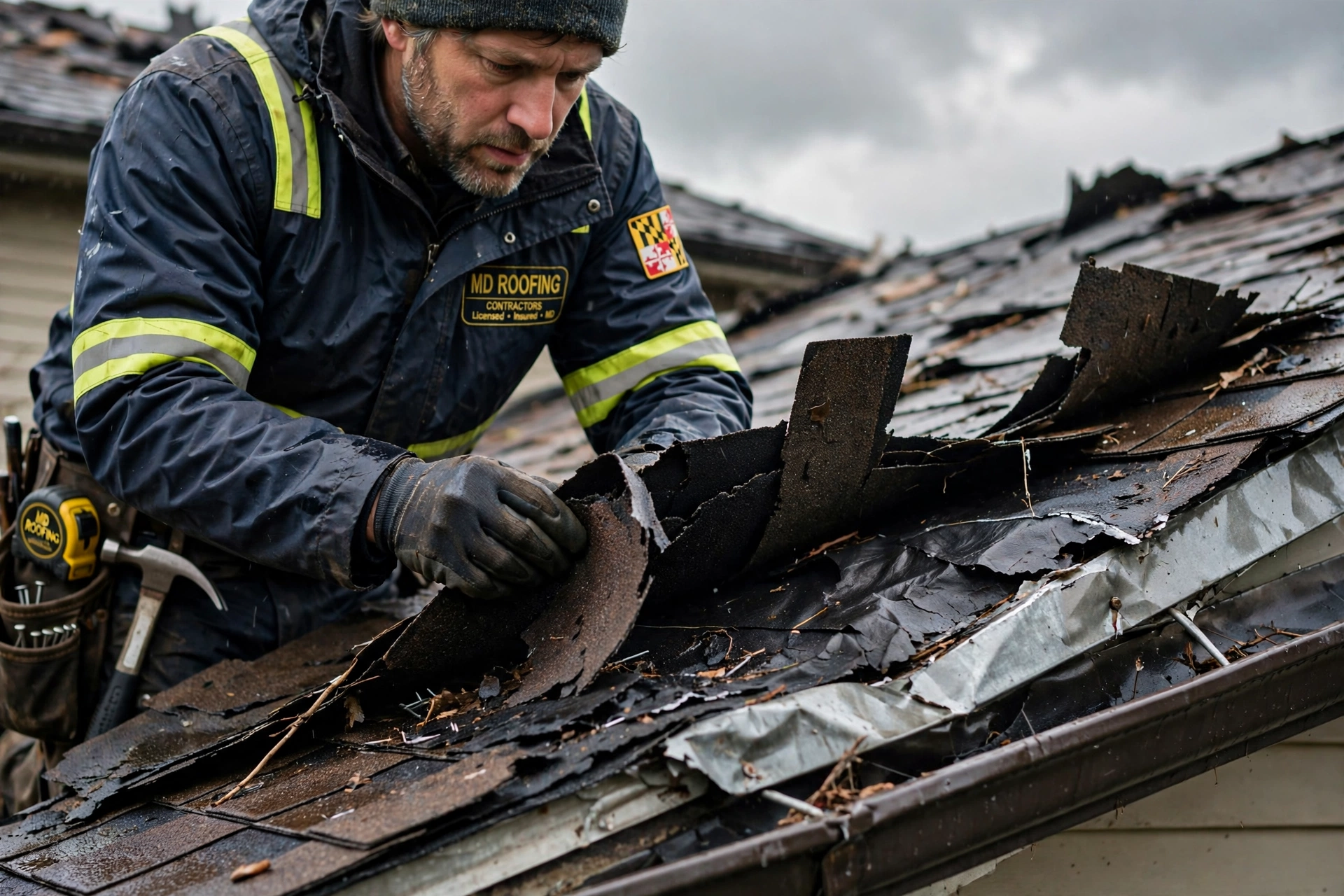
First, safety and temporary protection
Stay off the roof, especially in wet or windy weather, and keep away from wet electrics, fallen lines and unstable trees. If water is actively entering, move items away from wet areas if safe, and call to discuss temporary protection, because a tarp secured against wind can stop water from entering while a permanent repair is planned. A tarp is short-term protection, not a repair, and it should be checked from the ground after each storm until the permanent repair is done.
What to check from the ground
- Missing or lifted shingles, especially on windward slopes
- Debris in valleys and gutters, and dented flashing
- Water stains inside, and whether they follow rain or wind
- Gutters pulling away from fascia, or downspouts disconnected
- Siding damage, window damage, and tree or limb impact
- Hail bruising on shingles, gutters and flashing, if you can see it safely from the ground
How to document damage for an adjuster
Take ground-level photos of each slope, each damaged area, and any interior water, with dates and weather noted. A whole-roof record, slope by slope, helps an adjuster assess a claim, because damage is rarely limited to one wet spot. Note what the storm did, separately from pre-existing ageing, because many policies cover wind and hail damage, while wear from age or lack of maintenance typically is not covered. Your insurer decides coverage, and a clear, dated record helps that assessment, rather than a verbal description alone. Keep copies of photos, notes and any inspection report, and share them with your insurer when you file.
What an inspection should cover after a storm
An inspection after a storm should cover shingles for curling, cupping, cracking, missing shingles, granule loss, wind damage and hail bruising, flashing at chimneys, skylights, pipe boots and valleys, roof deck and structure for soft spots, ventilation for ridge and soffit condition, gutters and fascia for pitch and separation, and penetrations for every point where a hole in the deck exists. That whole-roof, slope-by-slope check is what separates a storm repair from a patch on the first wet spot, and it is why an inspection report should list findings by slope, not just by room.
After fall leaf season, a different check
Late fall, after leaves drop in Anne Arundel County, is an ideal time for a roof and gutter check before winter. Debris that accumulates in valleys and behind chimney crickets holds moisture against shingles and accelerates deterioration, and clearing it in November, with a quick inspection, catches issues before they face a winter of freezing rain, ice and snow. Call 410-755-8629 to discuss a storm or pre-winter check, and to confirm coverage for your address.
Related services
Frequently asked questions about After a Storm in Anne Arundel County: What to Check, Photograph, and Do Next
Should I file a claim immediately after a storm?
First, document what you see from the ground, and discuss the findings with a roofer and with your insurer, because a claim should reflect storm damage, not pre-existing ageing. Your insurer decides coverage, and a dated, slope-by-slope record helps that decision.
Can I check my own roof after a storm?
You can check from the ground, safely, but do not climb on a wet, windy or damaged roof. A professional inspection, slope by slope, is the reliable next step after a storm, especially for wind and hail damage that is easy to miss from below.
What if my roof looks fine from the ground?
That does not rule out damage, because lifted tabs, hail bruising and flashing damage can be invisible from the ground. If your neighbourhood was hit, or if you see interior stains, a whole-roof inspection is the right next step, even if the roof looks sound from the street.
What if my neighbours had damage, but my roof looks fine?
That does not rule out damage, because wind and hail affect slopes differently, and lifted tabs or hail bruising can be invisible from the ground. If your neighbourhood was hit, a whole-roof inspection, slope by slope, is the reliable next step, even if the roof looks sound from the street.
How soon after a storm should I check my roof?
Check from the ground as soon as it is safe, and document what you see with dates and photos, because damage is easier to separate from pre-existing ageing when it is documented close to the storm. A professional inspection should follow soon after, before the next rain makes the damage worse.
Talk to Roof Fixo
Call to discuss a storm check and photo documentation for your home, and to verify service availability.